
Have you been watching the 12 Days of Vlogmas? If not, you’re four days behind! On day three, I dropped a little Christmas learning. If you haven’t seen it yet, you can catch up with the video below!
Here is a loose transcript of the video if you want to facts without the fun. (But come on, why would you do that? I recommend you do both.)
FIGGY PUDDING
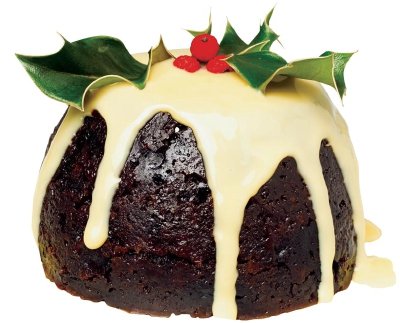
It’s more of a cake than a pudding, some have likened it to fruit cake, but boozier. It consists of dried fruit, bread crumbs, eggs, rum and brandy—among other things—and yes FIGS. It’s steamed (for 2 hours!). And also lit on fire—for presentation and DRAMA. It’s also referred to as Christmas pudding or plum pudding. Most popular in Britain (although fondness for the dessert is dying out), its origins can be traced back to Shakespeare’s time and it was banned in the 1600s by English Puritans. Mrs Cratchit made one in Charles Dickens’ A Christmas Carol. And, for course, it has immortalized demanding carollers in the lyrics of We Wish You A Merry Christmas.
HUMBUG
The word was first used in 1751 as student slang—”a word very much in vogue with the people of taste and fashion”—but you probably know it best as Ebenezer Scrooge’s catch phrase. It’s most commonly known to mean fraud. A humbug is a person or object that behaves deceptively or dishonestly. You might also know it from the Wizard of Oz, when the Wizard describes himself as “just a humbug.” It’s also the name of several cities in the U.S. and a hard mint candy in the U.K.
EGGNOG
So I looked up the origins of the word nog and got an immediate response of “nobody knows” ooooOOOOooh. Then I looked a bit harder and found that the “nog” part of eggnog may come from the Middle English word noggin, meaning small, carved wooden mug used to serve alcohol—but again, nobody really knows for sure. The drink is also known as Egg Milk Punch and Egg Flip. The French term for eggnog translates to Hen’s Milk.
TOM AND JERRY
Not the cat and mouse team, but rather, a Christmastime cocktail from the U.S.—predominantly in the Upper Midwest—invented by a British guy in the 1820s. The drink is similar to egg nog and most often served in a mug or a bowl. The name is in reference to the 1821 Pierce Egan book Life in London, or The Day and Night Scenes of Jerry Hawthorn Esq. and his Elegant Friend Corinthian Tom. Since then, the drink has been mentioned in movies such as 1940’s Beyond Tomorrow, 1941’s The Great Mr. Nobody, and 1960’s The Apartment. As well as the 1949 song by the comically exaggerated Swede character Yogi Yorgesson, “I Yust Go Nuts at Christmas” in which all the Js are replaced by Ys. Tom and Yerry.

 outloudkat, since 2009